Top 5 Tree Species for Small Urban Yards
Selecting the right tree for a small urban yard involves careful consideration of space constraints and environmental factors. Unlike expansive rural properties, urban plots often have limited soil volume, overhead utilities, and proximity to structures. The choice of species can significantly influence not only the aesthetic appeal but also the long-term health of the tree and its surroundings. This article explores five tree species that are well-suited for confined outdoor spaces, providing details on their mature dimensions, root behavior, and maintenance needs.
When planning a planting project, it is essential to evaluate both above-ground and below-ground space. The canopy spread, root system architecture, and potential for interference with buildings or pavement are critical factors. Additionally, local climate and soil conditions should guide the final selection. The species discussed here are known for their adaptability to urban environments and their ability to thrive in limited rooting areas, making them viable options for many residential settings.
Understanding Space Constraints in Urban Yards
Urban yards typically present unique challenges for tree growth. Restricted soil volume, compacted ground, and reflective heat from surrounding surfaces can stress trees. Moreover, proximity to sidewalks, foundations, and utility lines demands careful species selection to avoid future damage. A tree with aggressive roots or a wide-spreading canopy may become problematic over time. Therefore, understanding the growth habits of different species is fundamental to making an informed decision.
The mature height and canopy width of a tree determine its spatial requirements above ground. For small yards, species that remain under 30 feet in height and have a canopy spread of less than 20 feet are generally preferred. Additionally, the root system should be non-invasive and well-behaved, meaning it does not heave pavement or invade sewer lines. Ornamental features such as spring blooms, autumn color, or interesting bark can enhance the property without adding excessive maintenance burdens.
1. Japanese Tree Lilac (Syringa reticulata)
The Japanese tree lilac is a compact ornamental tree that typically reaches a height of 20 to 30 feet with a spread of 15 to 25 feet. It is prized for its creamy white panicles of flowers that appear in early summer, emitting a pleasant fragrance. This tree has a strong, upright form and often develops multiple trunks, although it can be trained to a single leader. Its bark is cherry-like, with prominent lenticels, adding winter interest. The tree is adaptable to a range of soil types, although it prefers well-drained, slightly alkaline conditions. It is also resistant to many common pests and diseases, including lilac borer and mildew, making it a low-maintenance option for urban environments.
In terms of root behavior, the Japanese tree lilac has a fibrous root system that is relatively shallow and non-aggressive. It does not typically damage pavement or foundations, but it is advisable to plant it at least 10 feet from hard surfaces to allow for proper root development. The tree thrives in full sun and can tolerate partial shade, though flowering may be reduced in shadier locations. Its moderate growth rate means it will not quickly outgrow its space, but periodic pruning helps maintain its shape and remove dead wood. For small urban yards, this lilac provides a tidy, manageable option that offers seasonal beauty without excessive maintenance.
2. Crabapple (Malus spp.)
Crabapples are a diverse group of small trees that vary in size, but many cultivars are suitable for small spaces. Dwarf varieties can grow as small as 8 feet tall, while semi-dwarf types reach 15 to 20 feet. The canopy spread typically ranges from 10 to 20 feet, depending on the cultivar. Crabapples are celebrated for their profuse spring blossoms, which range in color from white to pink to red, and for their small ornamental fruit that persists into winter. The fruit provides food for birds and adds visual interest, though some homeowners may prefer fruitless varieties to minimize litter.
Root systems of crabapples are generally shallow and wide-spreading, but they are not considered invasive. They rarely cause issues with sidewalks or foundations if planted with adequate space. However, because they are prone to certain fungal diseases such as apple scab and fire blight, selecting disease-resistant cultivars is essential for healthy growth. Modern varieties like ‘Adams’ and ‘Prairifire’ exhibit good resistance and are widely available. Crabapples are adaptable to various soil conditions, but they perform best in well-drained loam with full sun. Their moderate growth rate and manageable size make them a versatile addition to urban gardens, providing seasonal changes without overwhelming the space.
3. Eastern Redbud (Cercis canadensis)
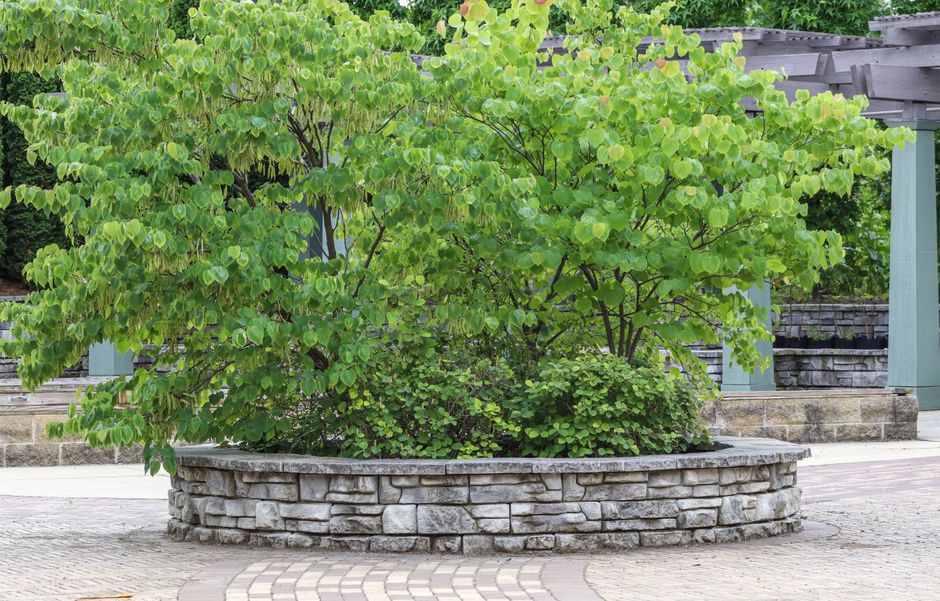
The Eastern redbud is a native North American tree that naturally grows as a small, multi-stemmed specimen, typically reaching 20 to 30 feet in height with a similar spread. Its heart-shaped leaves emerge in a reddish-purple hue before turning green, and in early spring, clusters of pea-like flowers appear along the branches, covering the tree in pink or lavender. In autumn, the foliage turns yellow, adding to its appeal. This tree is well-suited for small yards because it can be grown in both full sun and partial shade, though flowering is more profuse with adequate sunlight.
Redbuds have a relatively shallow root system that is not aggressive, but they do not tolerate excessive disturbance. They are sensitive to overwatering and poor drainage, so the planting site should have well-aerated soil. Once established, they are moderately drought-tolerant and generally free of serious pest problems. However, they may be susceptible to canker diseases if wounded or stressed. Their natural multi-stemmed form reduces the need for heavy pruning, although training to a single leader can create a more formal appearance. With a moderate growth rate, the redbud provides a graceful, heart-shaped canopy that fits well into confined spaces.
4. Serviceberry (Amelanchier spp.)
Serviceberry, also known as shadbush or Juneberry, is a small tree or large shrub that typically grows to 15 to 25 feet in height, with a spread of 10 to 20 feet. It is a four-season plant: delicate white flowers in spring, edible berries in early summer, brilliant orange-red foliage in autumn, and smooth gray bark with vertical stripes in winter. The berries attract birds and can be used in jams or pies if homeowners choose to harvest them. This tree is extremely adaptable and can flourish in various soil types, including clay, sand, and loam, provided the pH is slightly acidic to neutral.
The root system of serviceberry is fibrous and shallow, making it safe for planting near sidewalks and patios. It is also quite tolerant of urban conditions, including air pollution and occasional drought. Although it can grow in full sun, it performs best with some afternoon shade in hot climates. Serviceberry is relatively disease-resistant, but it may experience rust or leaf spot in humid regions. Because of its suckering nature, regular removal of suckers helps maintain a tidy appearance. This low-maintenance tree offers subtle beauty throughout the year and is an excellent choice for small spaces where interest is desired across seasons.
5. Amur Maple (Acer ginnala)
Amur maple is a small, deciduous tree that typically reaches a height of 15 to 20 feet, with a spread of 15 to 25 feet. It is known for its spectacular fall color, ranging from brilliant red to orange, and its fragrant, pale yellow flowers in spring. The leaves are three-lobed and emerge with a reddish tint before turning green. This maple is hardy and adaptable, thriving in a wide range of soil conditions, including poor soils, as long as drainage is adequate. It is also drought-tolerant once established and can withstand urban pollution, making it a resilient choice for city yards.
The root system of Amur maple is shallow and dense, but it is not known to be invasive or destructive to pavement. However, due to its dense root mat, it is advisable to avoid planting it in areas where you intend to grow underlying plants, as it can compete for moisture. Additionally, the tree can develop multiple trunks; pruning to a single leader encourages an upright form for smaller spaces. Amur maple is prized for its ease of care, as it is generally pest-free and deer-resistant. Its compact size and vibrant fall display make it a popular option for small yards aiming for high visual impact with minimal input.
Selecting the Right Tree for Your Yard
Choosing the most suitable tree for a small urban yard requires a balance between aesthetic preferences and practical constraints. Factors such as mature size, root behavior, and maintenance needs should be weighed. It is also important to consider the local hardiness zone, light exposure, and soil conditions. Consulting with a professional arborist, like those at GreenSpire Arborists, can provide valuable insights into species that are known to perform well in your area and how to care for them.
Once a species is selected, proper planting techniques and ongoing care are crucial for establishment. Adequate watering, mulching, and periodic inspections for pests or diseases will support healthy development. Regular pruning helps maintain the tree’s shape and prevents it from encroaching on structures or utilities. By understanding the long-term growth patterns of these compact trees, homeowners can create a verdant and functional outdoor space that enhances their property without exceeding its spatial limits.